Marine Carpuat on the Role of Language in AI Research
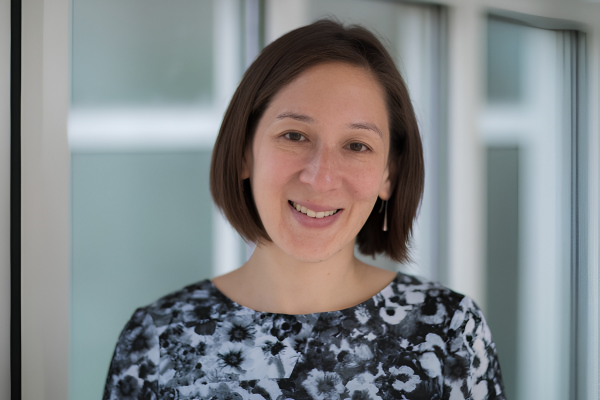
University of Maryland Associate Professor of Computer Science, Marine Carpuat, studies natural language processing, with a focus on multilingual artificial intelligence and cross-language communication. Her work examines how AI systems can help people communicate across languages while addressing the technical and human challenges that remain when translation tools are used in real-world settings.
In this Q&A, Carpuat discusses her career path, current projects, lab environment and advice for students entering NLP and AI research.
Thinking back, was there a defining moment that shaped your path into computer science?
It is hard to point to one defining moment. My career had a lot of twists and turns, and I started in a different place. I earned a master’s degree in electrical engineering before pursuing a Ph.D. in computer science.
When I was a master’s student, I began working on speech recognition. At first, the work was connected to signal processing and transcribing speech in multiple languages. Over time, I became more interested in the language side of the problem.
That experience led me toward natural language processing. At the time, I did not know it would become the basis for a career in computer science. I was exploring different directions, and I was fortunate to find a research area that connected language and computing in a way that interested me.
What is your research focus, and what drew you to multilingual AI?
My research is in natural language processing, which focuses on developing language technologies that help computers support the kinds of tasks people use language for.
Within that field, I focus on multilingual AI. I am interested in how AI systems can help people communicate across languages, learn across languages and succeed in multilingual settings.
There are two reasons I find this area important. Practically, multilingual communication makes barriers easier to see. People can misunderstand each other even when they speak the same language, but those challenges become more visible when communication happens across languages.
From a research perspective, multilinguality also gives us a way to examine the capabilities of AI models. If a model gives one answer in English and a different answer in another language, that suggests whether the system is reasoning consistently or relying on patterns that are stronger in one language than in another.
What are you working on now?
Some of my current work examines how people use AI translation tools in real-world settings. One project focuses on doctors who need to communicate with patients who do not speak the same language.
AI translation tools are already used in those settings, but the translations are not always correct. If a doctor writes information in English and the tool translates it into Chinese, for example, the doctor may not know whether the translation is accurate. That creates a problem when the information involves medication, symptoms or care instructions.
We are studying ways to help users identify translation problems. Rather than giving a general score, such as saying a translation is 75% accurate, we generate questions about the original content and compare answers from the original and translated versions. If the answers differ, that can point to a possible error.
That kind of information can be more useful because it gives people something specific to examine, even if they do not speak the target language.
How does that practical work connect to your more technical research?
Practical studies show that higher translation scores do not always mean people communicate better. Even when a translation is technically correct, cultural context can still affect how a message is understood.
That motivates the more foundational side of my research. We are studying what happens inside large language models when they answer a question correctly in one language but incorrectly in another.
In one recent project, we examined how knowledge is represented within multilingual models. We found that when knowledge representations in English and another language do not align well in the middle layers of transformer models, the model is more likely to produce an incorrect answer in the other language.
That helps us understand where the system may be failing and how we might improve multilingual performance. The next challenge is determining when models should give the same answer across languages and when they should preserve language- or culture-specific knowledge.
Can you describe your lab?
My group is part of the Computational Linguistics and Information Processing Lab, or CLIP Lab. The group includes mostly Ph.D. students, along with some master’s students and undergraduates.
The work is connected to several areas, including machine learning, linguistics and human-computer interaction. Some students focus more on user studies and how people interact with AI tools. Others focus more on the machine learning side, including work on model representations and interpretability.
Many students in the group are drawn to multilingual research because of their own experiences with multiple languages or cultures. Those experiences often help shape the research questions we ask.
What has made UMD a useful place for this work?
The collaboration at UMD has been important for my research. In computer science, there are faculty members working in natural language processing and machine learning. I also connect with researchers in linguistics, the College of Information, the University of Maryland Institute for Advanced Computer Studies and the Institute for Trustworthy AI in Law & Society.
Those connections matter because multilingual AI is not only a technical problem. It also involves questions about people, culture, language and communication.
What advice would you give students interested in NLP or AI research?
The field moves quickly, and a large amount of work is being published. That can make it difficult to decide what to focus on.
I think students need a clear internal sense of direction. They should ask themselves what question they care about and why it matters. It is important to understand what is happening in the field, but having that “North Star” can help students make progress without being pulled in every direction by new trends.
—Story by Samuel Malede Zewdu, CS Communications
The Department welcomes comments, suggestions and corrections. Send email to editor [-at-] cs [dot] umd [dot] edu.